Gym Relocation

Gym flooring lift and relay

Gym flooring lift and relay in the UK: rubber tiles, interlocking mats and lifting platforms lifted, moved and relaid at the new site. Typical prices.

In short: Gym flooring lift and relay is the removal, transport and reinstallation of rubber tiles, interlocking mats and lifting platforms from one space to another. It suits gyms, studios and home gyms moving premises or reorganising. In the UK, lifting and relaying loose-laid rubber tiles typically costs £5 to £15 per square metre, with glued floors and platforms priced separately.

Get a free quote

Fixed price, no obligation. We aim to reply the same day.

By sending this form you agree to be contacted about your enquiry. See our privacy policy.

Gym flooring lift and relay

Rubber gym flooring is expensive and durable, so reusing it is often good value. Loose-laid interlocking tiles and heavy mats can be lifted, cleaned, stacked on pallets and relaid. Tiles are numbered or mapped as they come up where the layout matters, for example where coloured zones, logos or drop areas are set into the floor. Lifting platforms are moved as complete units where possible.

Flooring usually goes in before the equipment at the new site, so it controls the timetable. The new subfloor should be clean, dry and level. Glued-down rolls are harder to reuse because adhesive damages the backing, so these are often replaced. Thickness also matters: free-weight and drop areas need thicker flooring than cardio zones to protect the subfloor and reduce noise.

What is included

  • Survey of the existing flooring type, thickness and condition
  • Mapping and numbering of tiles where the layout matters
  • Lifting, cleaning and stacking tiles and mats on pallets
  • Moving lifting platforms as complete units where possible
  • Check of the new subfloor for level, moisture and debris
  • Relaying tiles to the new layout with cuts at walls and obstructions
  • Edge ramps or trims where the floor meets other surfaces

Who it is for

  • Gyms and studios moving premises with good-quality rubber flooring
  • Reconfiguring zones within an existing gym
  • Refurbishments where the floor must come up and go back down
  • Home gyms moving to a new garage or garden room
  • Leases that require the unit to be returned to its original floor

How much does it cost?

As a guide, lifting and relaying rubber tiles in the UK typically costs £5 to £15 per square metre. Glued floors, heavy platforms and extensive cutting cost more, and new flooring is priced separately. See our full cost guide.
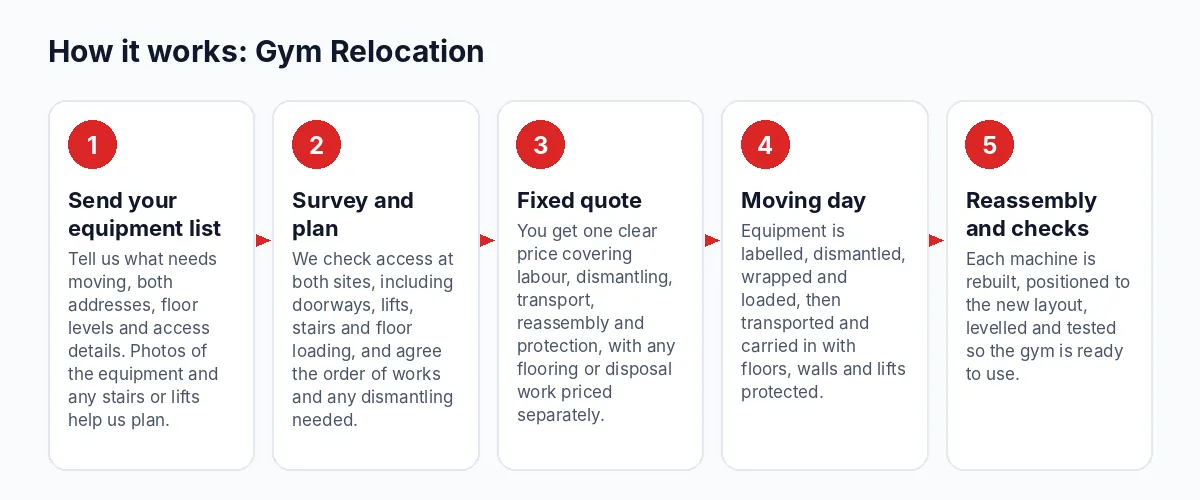
How it works

How gym flooring lift and relay works, step by step
  1. Assess and map

    The flooring type and layout are recorded so tiles can be relaid in the right zones.

  2. Lift and stack

    Tiles and mats are lifted, cleaned and stacked on pallets for safe transport.

  3. Prepare the new floor

    The new subfloor is checked and cleaned, and the layout marked out.

  4. Relay

    Tiles and platforms are laid, cut to fit and trimmed before equipment is installed.

Gym flooring lift and relay: FAQs

Can glued rubber flooring be reused?

Sometimes, but it is often not worth it. Lifting glued rolls tends to tear the backing and leaves adhesive on both the rubber and the subfloor, which makes relaying difficult. Glued flooring may also have been cut to fit the old room. In many cases it is better to remove it, recycle it if possible and lay new flooring at the new site.

How thick should gym flooring be?

It depends on the use. Thinner rubber is often used under cardio and resistance machines, while free-weight areas and drop zones use thicker tiles or platforms, often 20mm to 40mm or more, to protect the subfloor and reduce impact noise. Where heavy lifts are dropped, a dedicated platform is the usual solution.

Should flooring go down before equipment?

Yes, in almost all cases. Laying flooring first means machines go straight into position and do not have to be moved twice. It also avoids heavy kit damaging an unprotected subfloor. The only exception is sometimes small mats under individual machines, which can be placed as the equipment goes in.

What subfloor does rubber gym flooring need?

A clean, dry, firm and reasonably level surface, such as concrete or a solid timber floor. Moisture in new concrete slabs can cause problems with some flooring, so new buildings may need the slab checked. Uneven floors should be levelled first, otherwise tiles can lift at the joints.

Get a quote for gym flooring lift and relay

Send a few details and get one clear, fixed price, usually the same day.

Get a quote

Last updated 6 November 2026